
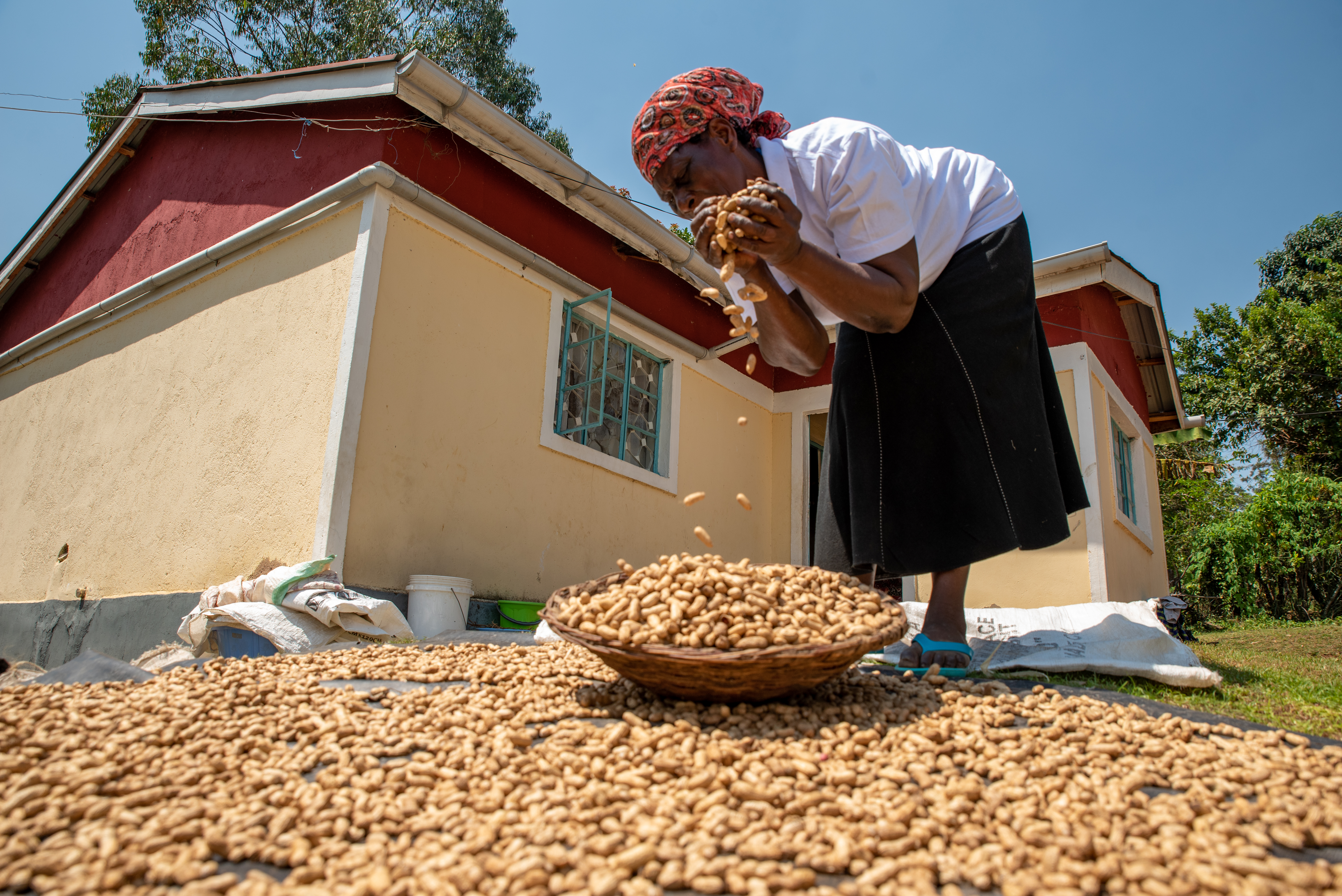
In many rural communities, agriculture is more than just a means of survival—it’s a pathway to economic empowerment and sustainable development. Recognizing this, the Justice And Mercy (JAM) Community Integrated Project has championed groundnut farming as a high-potential value chain, helping farmers boost productivity, increase incomes, and improve food security.
Groundnuts (peanuts) are not only a nutritious food staple but also a versatile cash crop with immense economic value. Through targeted interventions, JAM is transforming groundnut farming into a thriving agribusiness sector, benefiting smallholder farmers, women, and youth across communities. Groundnuts are a powerhouse of nutrition, packed with protein, healthy fats, and essential vitamins. Beyond their dietary benefits, they offer multiple income opportunities through processing into oil, peanut butter, snacks, and animal feed. Additionally, groundnut plants enrich the soil by fixing nitrogen, making them an environmentally sustainable crop.
The JAM Community Integrated Project is transforming groundnut farming through a holistic approach that empowers farmers at every stage of production. By providing hands-on training in modern farming techniques, JAM equips farmers with improved planting methods, effective pest management strategies, and efficient irrigation practices. Additionally, workshops on post-harvest handling help minimize losses and enhance the marketability of crops.
To boost productivity, JAM ensures farmers have access to high-quality, disease-resistant groundnut seeds, along with affordable fertilizers and organic farming inputs, promoting sustainable cultivation. Beyond production, the project strengthens market linkages by connecting farmers directly with buyers, agro-processors, and export markets, cutting out exploitative middlemen. Cooperative farming models further empower small-scale farmers to negotiate better prices collectively.
JAM also emphasizes value addition, training farmers in agro-processing techniques such as oil extraction, roasting, and packaging to increase profitability. Special support is given to women-led enterprises, enabling them to produce peanut butter and other value-added products. Recognizing the challenges of climate change, JAM promotes drought-tolerant groundnut varieties and trains farmers in soil conservation and water management, ensuring long-term resilience and productivity. Through these initiatives, JAM is not only improving yields but also fostering sustainable livelihoods for groundnut farmers.
Groundnut farming, supported by the JAM Community Integrated Project, is transforming lives by driving economic growth, empowering communities, and promoting sustainable agriculture. By boosting yields and improving market access, JAM has enabled farmers to double or even triple their incomes, lifting many from subsistence farming into profitable agribusiness. This economic shift is not only reducing poverty but also creating jobs across the groundnut value chain—from farming and processing to trading—helping curb rural-urban migration. Young people, inspired by new opportunities, are embracing agripreneurship with JAM’s guidance.
Women, who play a central role in small-scale farming, are gaining financial independence through groundnut cooperatives and agro-processing ventures, strengthening their economic standing. Beyond income, groundnuts contribute to improved nutrition and food security, offering an affordable source of protein and healthy fats to combat malnutrition in vulnerable households.
Environmentally, groundnuts act as a natural soil enhancer, fixing nitrogen and reducing reliance on chemical fertilizers—making farming more sustainable. The JAM Community Integrated Project is committed to expanding these benefits, inviting farmers, investors, and development partners to join this movement for rural transformation.
The story of groundnut farming under the JAM Community Integrated Project is one of transformation—where a humble crop becomes a catalyst for economic liberation, gender equality, and environmental stewardship. By equipping farmers with knowledge, resources, and market access, JAM has demonstrated how agriculture can evolve from subsistence to sustainability, from struggle to prosperity.
Each harvested groundnut represents more than just food or income; it symbolizes resilience for women entrepreneurs, hope for youth agripreneurs, and food security for vulnerable families. As these efforts ripple through communities, they prove that sustainable agriculture is not merely about growing crops—it’s about nurturing self-reliance, revitalizing ecosystems, and building futures.
The success of this initiative invites us all—farmers, partners, and supporters—to sow the seeds of change together. With continued collaboration, groundnut farming can scale beyond individual livelihoods to fuel broader rural development, proving that when we invest in people and the planet, the harvest is always abundant. JAM’s model shows that true progress lies at the intersection of empowerment and sustainability, where every seed planted today grows into tomorrow’s opportunity.